
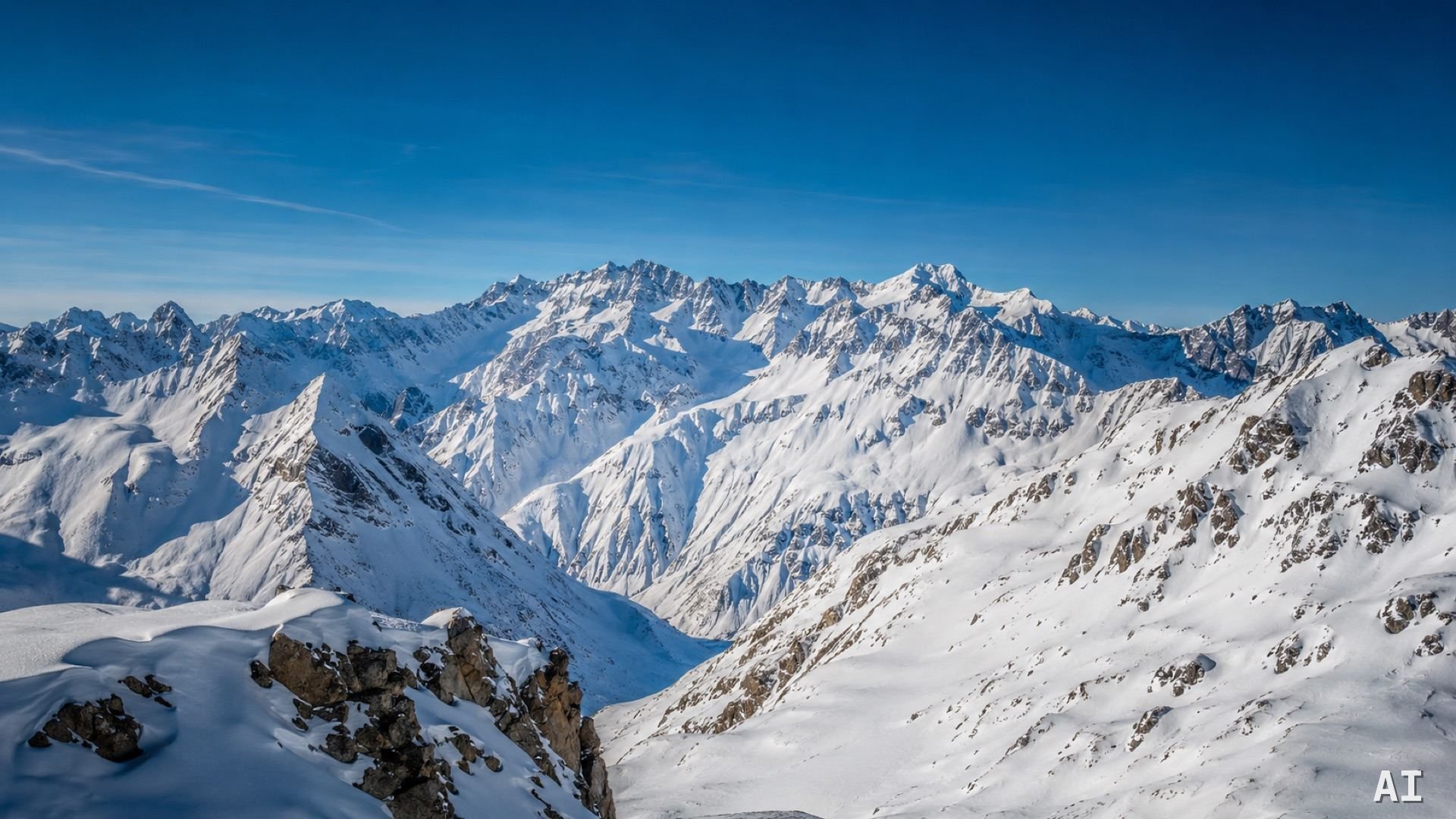
The Snow Pocket as Geophysical Phenomenon
The Arlberg region, specifically the Lech-Zürs and Warth-Schröcken axis, positions itself as a meteorological anomaly of almost defiant consistency. With an average of 11 metres of fresh snow per year, Warth-Schröcken is the snowiest ski resort in the Alps.
Meteorological Anatomy
The Arlberg is not a quirk of nature, but the result of a perfect orographic trap.
Northwest Stau Dynamics
Atlantic low-pressure systems hit the Bregenzerwald and Arlberg massif from the northwest. Moist air masses are forced to rise rapidly along the slopes. The result: massive snowfalls that reach even the valleys.
The Warth-Schröcken Phenomenon
Warth sits in a basin at Tannberg, flanked by mountain ranges that act like a funnel for clouds. Whilst the Rhine Valley clears, Warth often continues snowing for another 24 hours: the famous "aftersnow effect."
Temperature Inversion
On clear winter nights, heavy cold air collects in the hollows of Zürs and Lech. This natural "deep freeze" preserves snow extremely effectively: even during thaws in the valley, powder snow remains intact.
Global Benchmark
The Arlberg is the only European region that breaks into the phalanx of North American and Japanese "deep powder" destinations.
Snowfall at the Arlberg
Comparison of the last 10 seasons (in metres)
Global Comparison
Average annual snowfall of leading ski resorts
Chronicles of White Gold
The Arlberg's snow security is not a static number, but a lived history.
Father Müller's Liberation
Father Johann Müller secretly ordered skis from Sweden and covered the route from Warth to Lech in just one and a half hours. This journey marks the birth of skiing at the Arlberg.
Hannes Schneider's Revolution
The "Arlberg Technique", from snowplough to parallel turn, was not an aesthetic whim but a survival strategy in deep snow.
The Avalanche Winter
Three consecutive northwest stau events dumped unimaginable amounts of snow. Lech and Zürs were cut off from the outside world, but the massive protection structures held.
Snowbound in Luxury
12.43 metres seasonal total in Warth. Guests waited with schnitzel and champagne for the storm to end: the best advertisement for snow security.
The Eternal Winter
239 days of uninterrupted snow cover: a winter that occupied almost 80% of the year.
Future Outlook
The existential question: Will climate change end this historic snow abundance?
The "Too High to Fail" Hypothesis
Lech (1,450m), Zürs (1,700m), and Warth (1,500m) are high enough. A rise in the snow line from 800m to 1,200m is fatal for Kitzbühel, but irrelevant for the Arlberg.
The Moisture Paradox
Warmer air transports more moisture. In high-altitude stau locations like the Arlberg, extreme snowfall events could actually increase.
Technological Adaptation
Snow farming, ecological snowmaking with 100% renewable energy, and smart snow depth measurement secure the season start regardless of weather.
The Arlberg as Alpine Arcadia
The snow quantities are so massive that they provide a safety buffer that hardly any other region on Earth possesses. Here, nature dictates the conditions, and the condition is: snow, in abundance.
Sources & References
Lawinenwarndienst Vorarlberg
Official avalanche warning service of Vorarlberg, established in 1953 as the first in Austria. Provides daily avalanche forecasts and safety bulletins.
WSL Institute for Snow and Avalanche Research SLF
Switzerland's leading research centre for snow, avalanches, and natural hazards in the Alps. Part of ETH Domain, based in Davos.
Ski Arlberg -- Lech Zurs Ski Region
Official ski resort information for Austria's largest interconnected ski area with 300km of runs and comprehensive safety infrastructure.
GeoSphere Austria (ZAMG)
Austria's national meteorological and geophysical service, founded in 1851. Operates over 250 measurement stations for weather and climate data.
European Avalanche Warning Services (EAWS)
European body responsible for the standardised 5-level avalanche danger scale used across all Alpine countries since 1994.
Lech Zurs Tourism
Official destination portal for Lech Zurs am Arlberg with current snow reports, safety information, and resort infrastructure details.