
01
The Arlberg as Biogeographic Crossroads
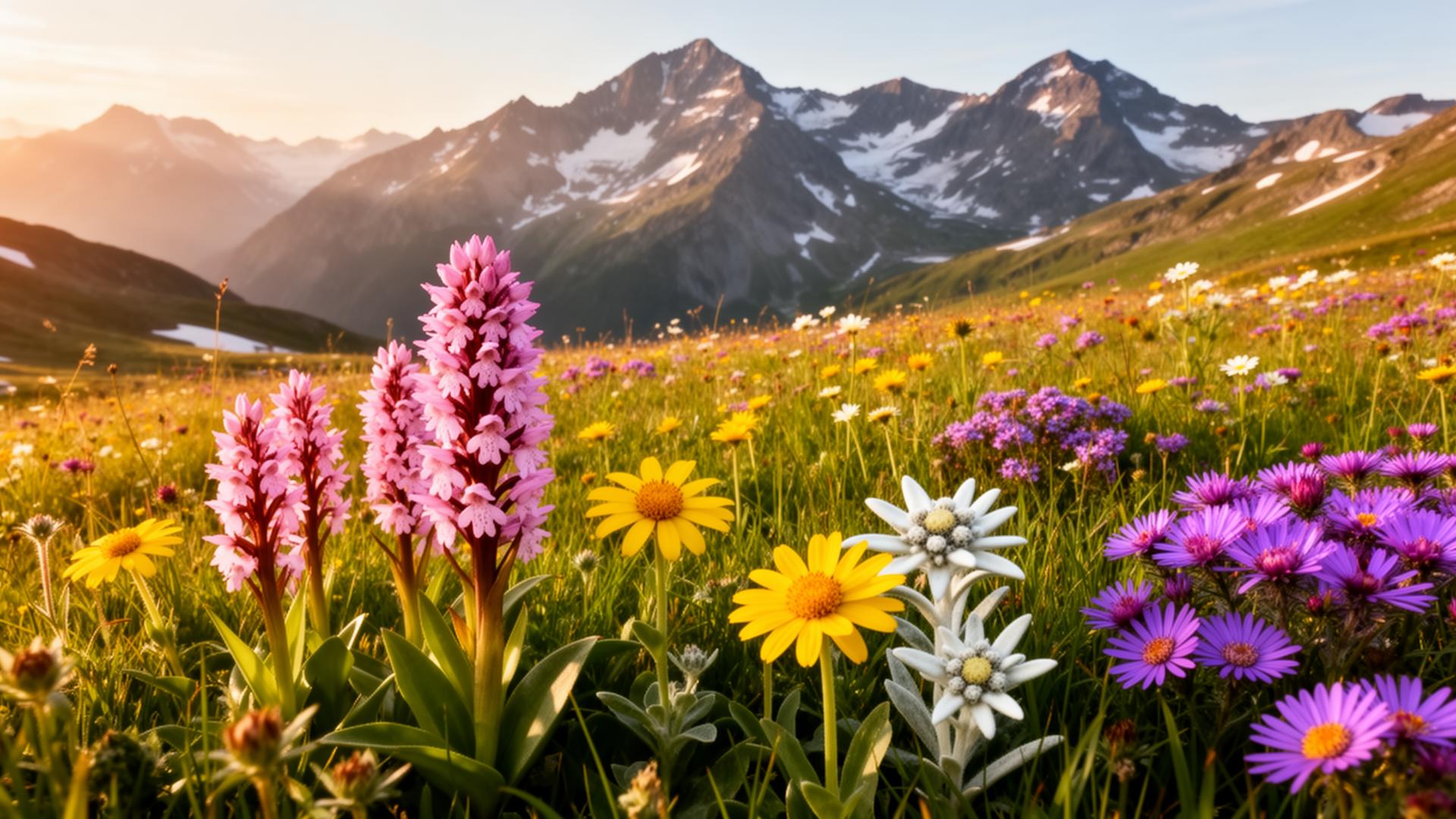
The Arlberg region, situated at the interface of the Austrian federal states of Vorarlberg and Tyrol, represents far more than a mere geopolitical boundary. From a vegetation science and biogeographic perspective, this high-mountain area functions as an ecological transition zone of outstanding significance.
The topographic heterogeneity, ranging from the dynamic floodplains of the Lech (approx. 1,000 m a.s.l.) to the nival summit regions of Rüfikopf and Mohnenfluh (over 2,500 m a.s.l.), generates a density of habitats unparalleled in the Northern Limestone Alps.
Following the retreat of the Pleistocene ice masses, the undeveloped river valley served as the primary migration corridor for dealpine and prealpine plant species. This historical biocenotic dynamic manifests today in a species density significantly above the average of comparable alpine valleys.
02
Geology & The Gypsum Sinkholes of Oberlech
Solution Dynamics and Doline Formation
A geomorphological singularity of European significance are the gypsum sinkholes in Oberlech. The bedrock here consists of gypsum (calcium sulfate, CaSO₄·2H₂O) and anhydrite: relics of the Tethys Sea from the Triassic period.
The dissolution rate of gypsum is enormous: one cubic meter of water can dissolve approximately 1.6 to 2.5 kg of gypsum at saturation. With the typical high annual precipitation of about 2,000 mm, this means that theoretically up to 3 kg of rock per square meter can be eroded annually.
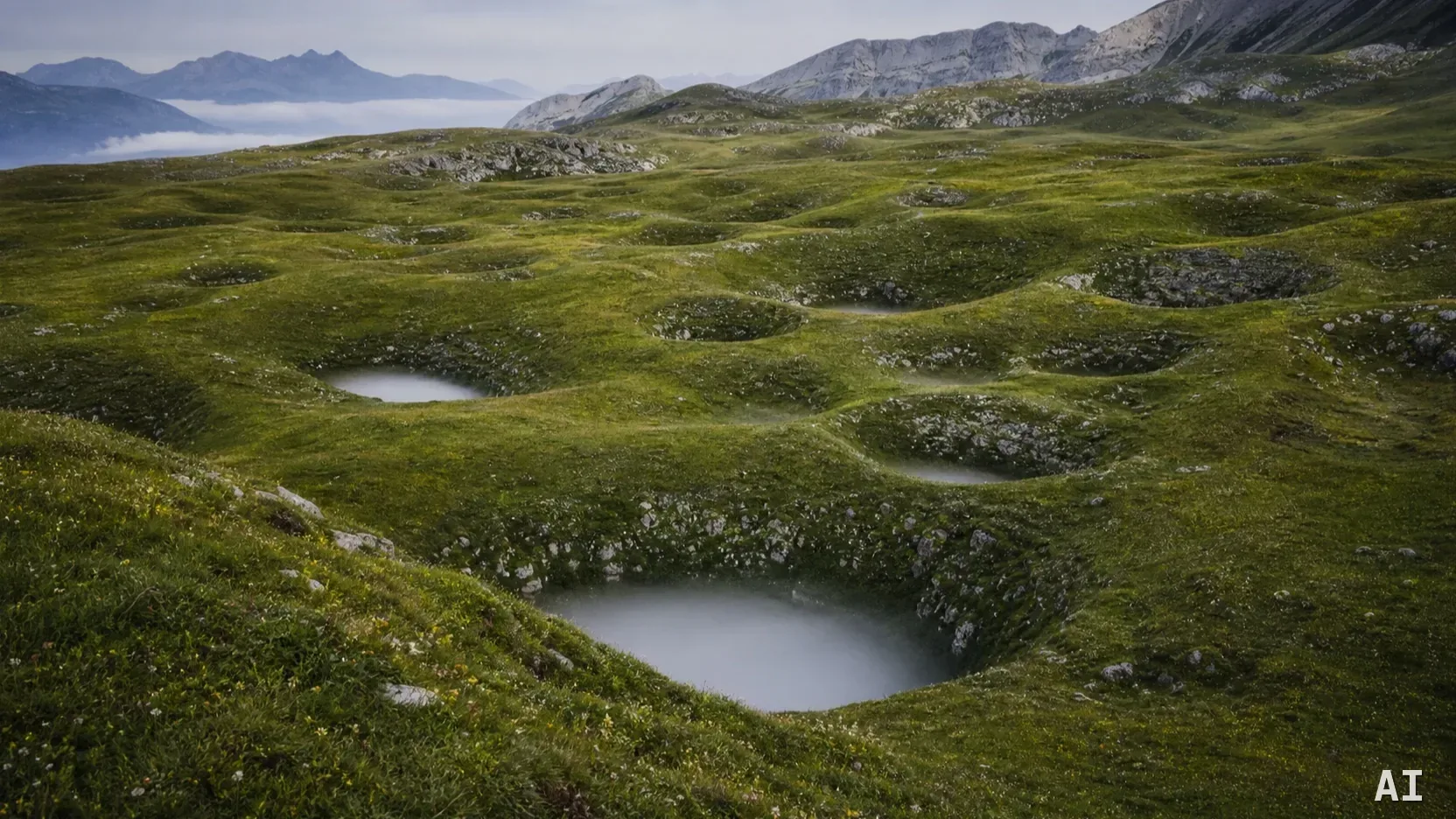
The result is a pockmarked landscape of over 1,000 sinkholes (dolines), whose dimensions are impressive: the largest funnels reach diameters of 100 meters and depths of up to 35 meters.
Microclimatic Inversion
In the deep, wind-protected dolines, cold air accumulates because it has a higher density than warm air. Cold air pools form: a physical effect that leads to an inversion of vegetation zones.
At the doline floor, a cool, humid climate prevails with long-lasting snow cover. Here we find plant species of the alpine to nival zone that "descend" into what is actually a subalpine zone.
At the doline edges, more warmth-loving species thrive. This mosaic enables the direct coexistence of plant species that would normally be separated by hundreds of meters in elevation.
Interactive
Microclimatic Inversion
Cold air pools in the doline
Move the slider to see the effect of sun angle
03
The Wild River Ecosystem: The Lech
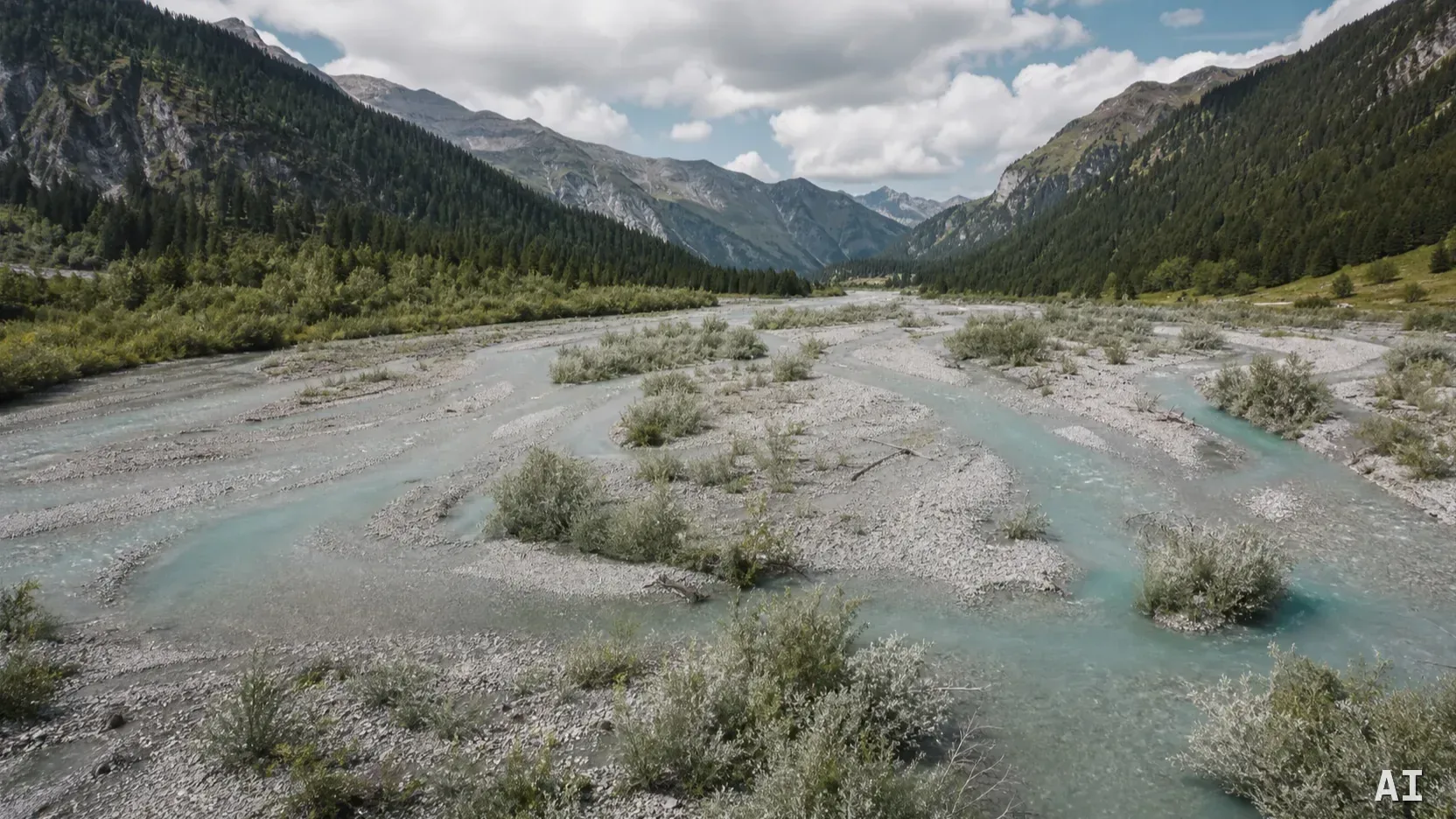
The Lech is one of the last rivers in the Northern Alps that still exhibits a wild river character with braided channels over long stretches. This dynamic is the engine of biodiversity.
A wild river transports enormous amounts of sediment. Every flood rearranges gravel banks, tears away vegetated islands, and creates new raw soils. This constant "disturbance" prevents the forest from completely conquering the riverbed.
Myricaria germanica
German Tamarisk
The indicator species of alpine wild rivers. A shrub up to 2 meters tall with rod-shaped, flexible branches and bluish-green scale leaves.
Typha minima
Dwarf Bulrush
One of the rarest plants in the Alps. Only 30-80 cm tall with extremely narrow leaves and a characteristic bipartite flower head.
Salix elaeagnos
Rosemary Willow
The "architect" of the floodplain. Its flexible branches lie flat during floods, protecting the root ball from erosion.
04
Orchid Paradise: The Gypsum Sinkholes
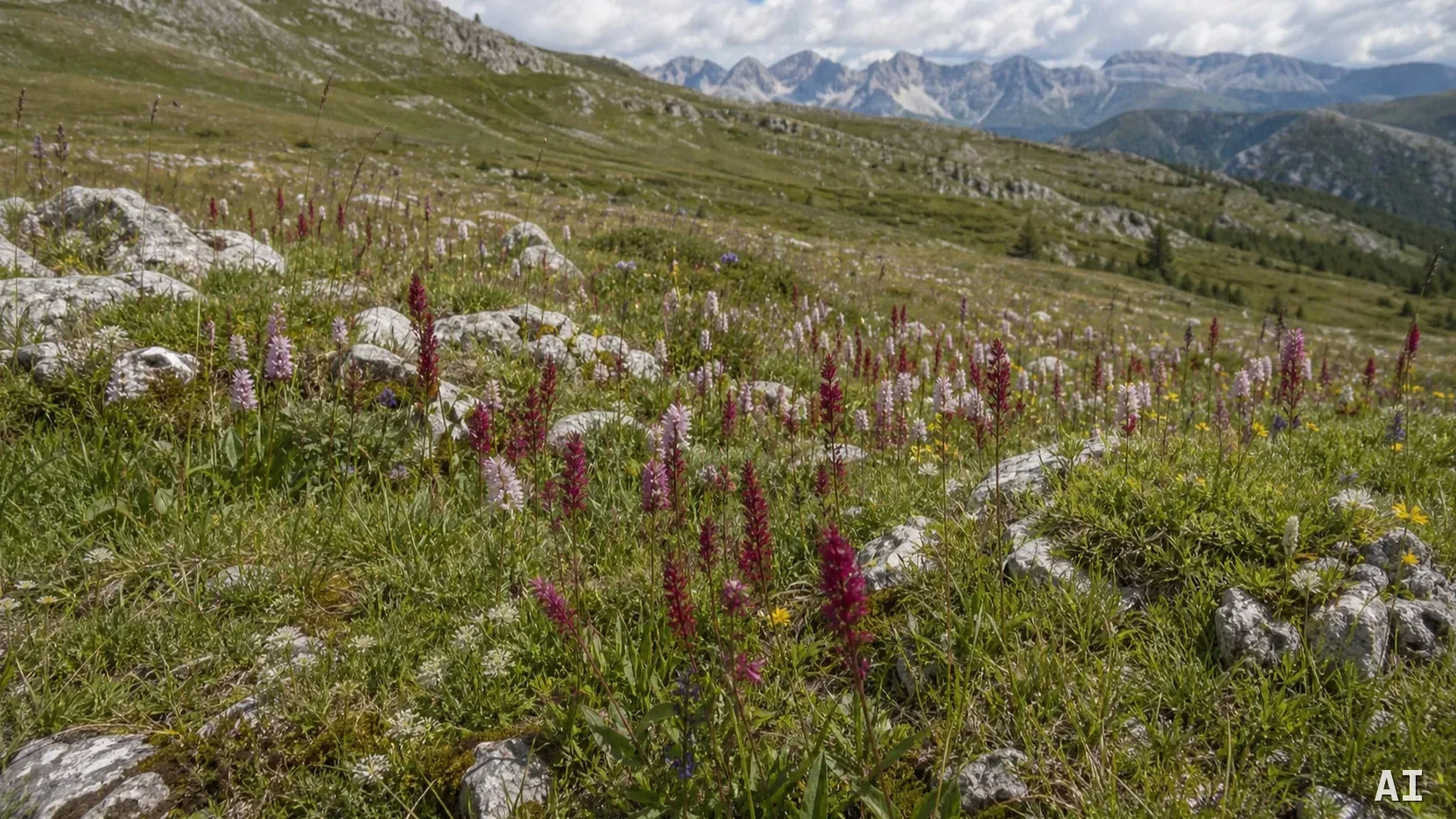
Calcareous, nutrient-poor soils are the El Dorado for terrestrial orchids. The combination of gypsum bedrock and the special hydrology of the dolines massively promotes this family.
Cypripedium calceolus
Estrictamente protegidoLady's Slipper Orchid
The largest and most striking native orchid. The lip is transformed into a bright yellow, inflated "slipper".
A "pitfall flower." Insects fall into the smooth basin: the only way out leads past the stigma and anthers. It takes up to 15 years from seed to first bloom.
Gymnadenia nigra
Estrictamente protegidoBlack Vanilla Orchid
Compact, almost spherical flower head of deep dark red to black-violet color.
The intense vanilla scent is perceptible far and wide on warm days. Grows in nutrient-poor meadows and alpine pastures.
Gymnadenia miniata
Estrictamente protegidoRed Vanilla Orchid
Much rarer than the Black Vanilla Orchid. The flowers are bright light red to ruby red.
Grows in even stonier, drier locations. Also exudes a vanilla fragrance.
Dactylorhiza majalis
Estrictamente protegidoBroad-leaved Marsh Orchid
Robust, hollow stems with spotted leaves and purple, three-lobed flower heads.
Prefers the moister depressions of the dolines and spring areas.
Gymnadenia conopsea
Estrictamente protegidoFragrant Orchid
Tall, slender growth with pink to lilac, cylindrical flower heads.
The long spur contains nectar accessible to butterflies.
05
Survival Artists on the Rock: Rüfikopf
Interactive
Survival Artists on the Rock: Rüfikopf
Rüfikopf (2,350 m) offers insights into high alpine vegetation. Here, conditions are extreme: high UV radiation, strong winds, short growing season.
Click a strategy for details
06
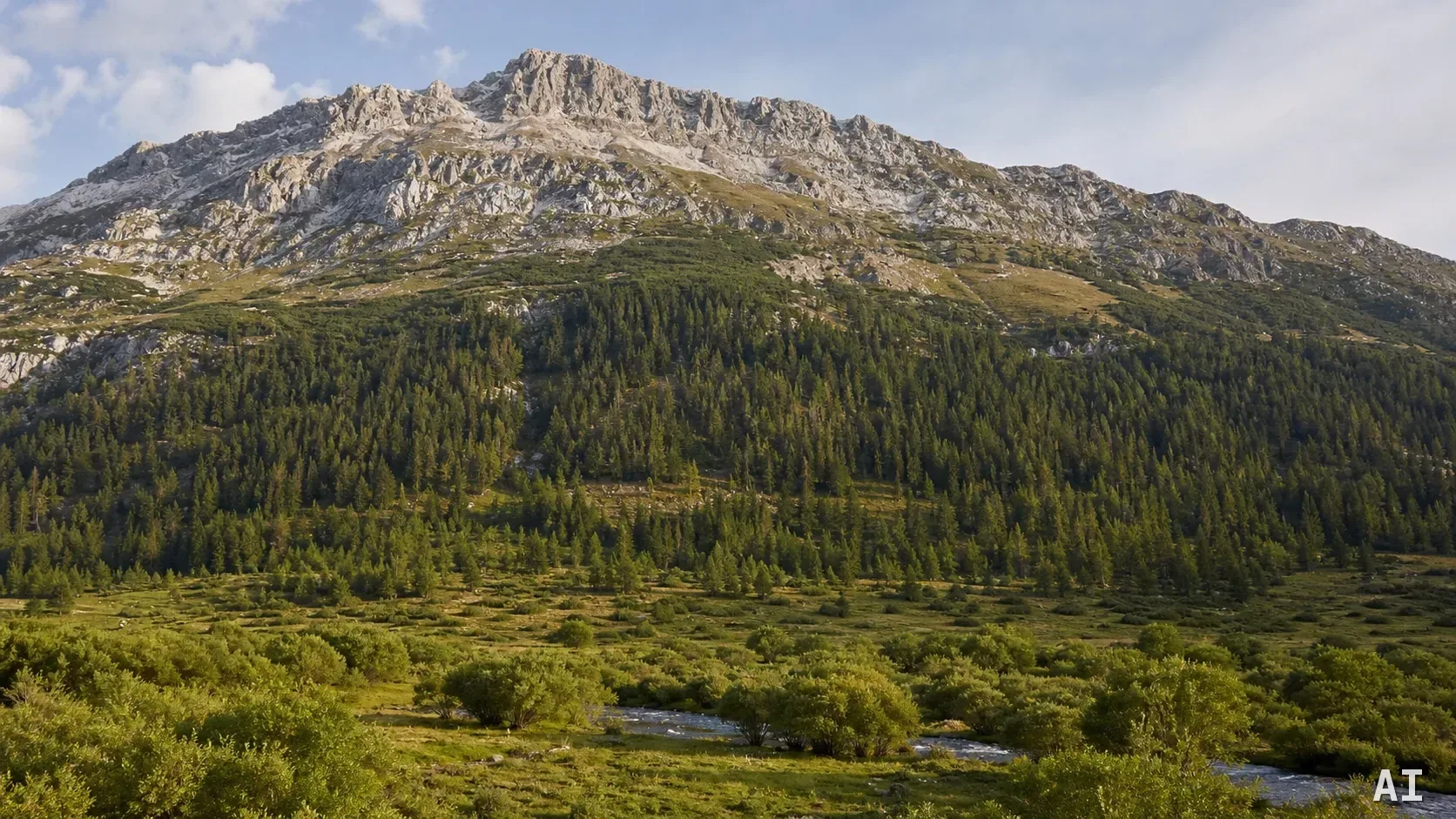
Vegetation Zones
Interactive
Vegetation Zones of the Arlberg
Hover over zones for details
07
Toxic Beauties
Many of the most attractive plants in the region are highly poisonous. This knowledge is essential for hikers and pet owners.
Aconitum napellus
Advertencia: Muy tóxicoMonkshood
Europe's most poisonous plant. A few grams of the root or leaves can be fatal to an adult.
Numbness even on skin contact. When ingested: burning in mouth, heart arrhythmias, respiratory paralysis.
Veratrum album
Advertencia: Muy tóxicoWhite False Hellebore
Often confused with Yellow Gentian. Contains steroidal alkaloids (protoveratrine).
Severe vomiting, blood pressure drop, cardiac arrest.
08
Conservation and Threats
The botanical diversity of the Arlberg is not a static state but threatened and in need of protection. In Vorarlberg, the nature conservation regulations strictly govern the handling of plants.
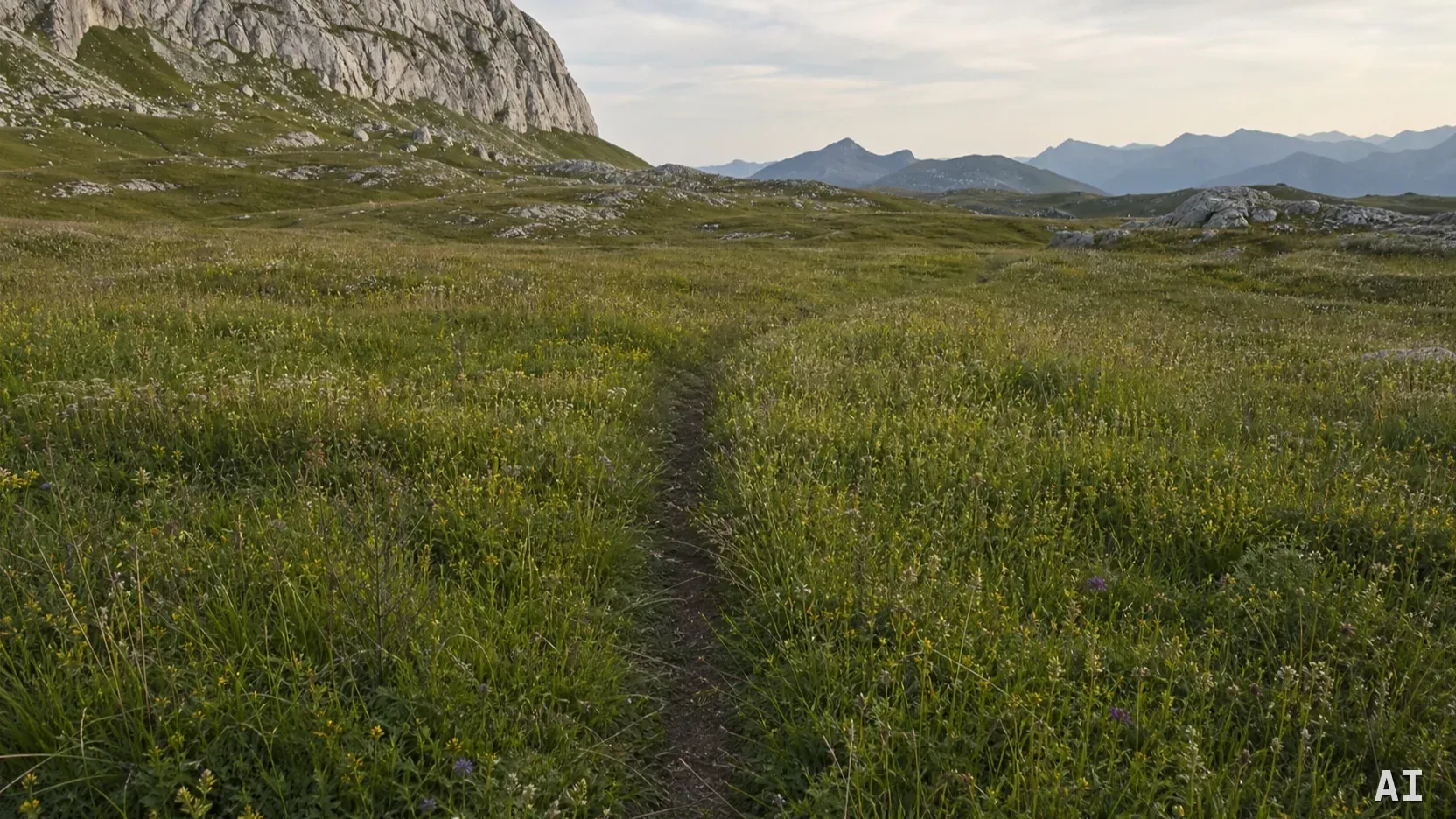
In the Gypsum Sinkholes nature reserve, there is an absolute path requirement and a general picking ban for all plants to protect the sensitive vegetation cover.
Protection Rules
- •Complete protection for Lady's Slipper, Edelweiss, all gentian and orchid species
- •Absolute path requirement in the Gypsum Sinkholes nature reserve
- •General picking ban for all plants in the protected area
- •Avoid trampling damage: alpine plants only recover after decades
09
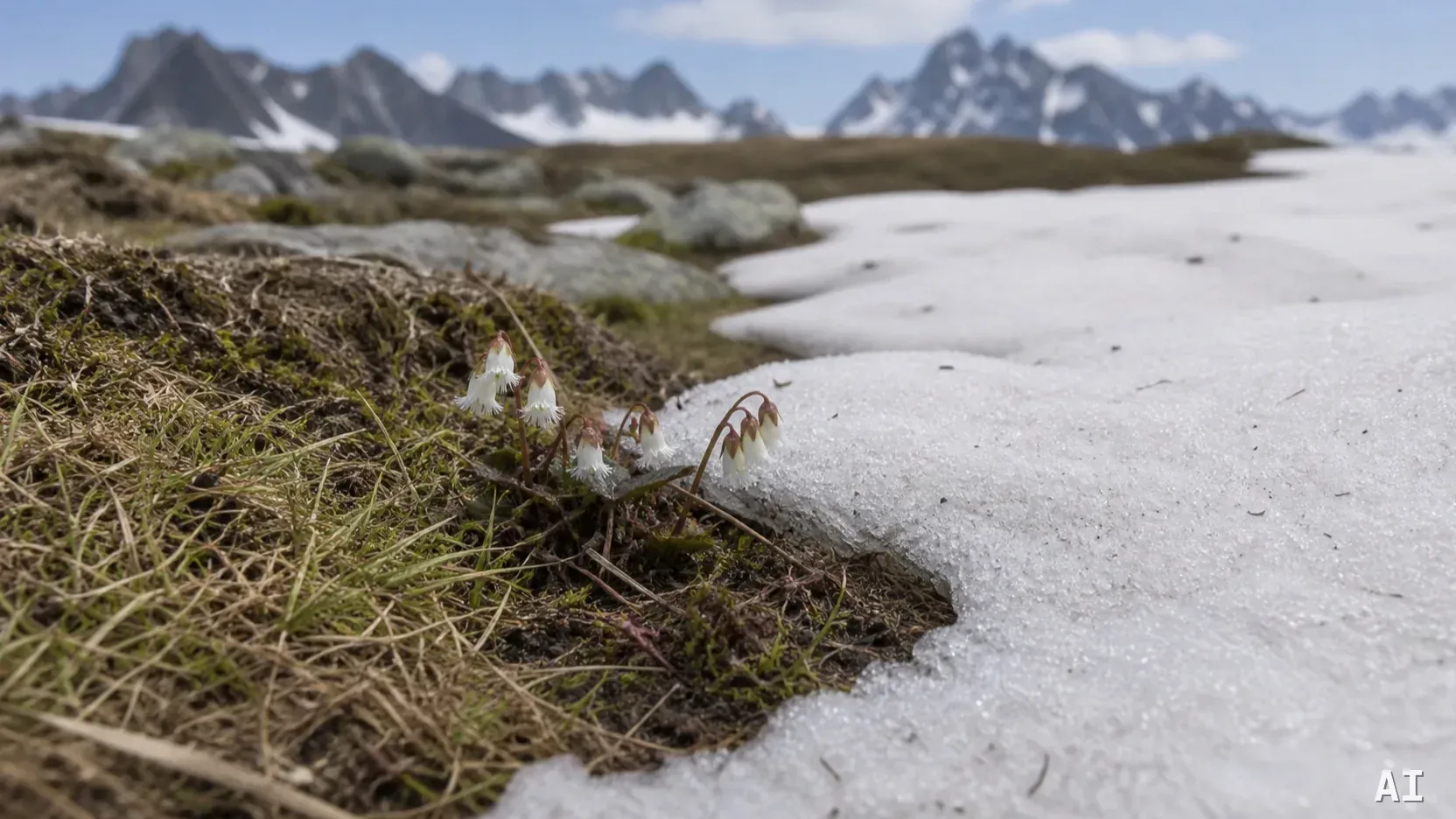
Phenological Calendar: What Blooms When?
Interactive
Phenological Calendar: What Blooms When?
Click a month for details
July
Midsummer (Peak Bloom)
Conclusion
A Living Archive of Earth History
The flora of Lech and the Arlberg is a fascinating archive of Earth history. It tells of the Tethys Sea (limestone/gypsum), of the Ice Ages (Mountain Avens, dwarf shrub heaths), and of the post-glacial recolonization via the Lech Valley bridge.
The coexistence of toxic defense strategies, complex pollination symbioses, and extreme physiological adaptations to cold and drought makes every square meter of this area a textbook of botany.
The strict protection of these habitats is not bureaucratic arbitrariness but the essential prerequisite for preserving this heritage for future generations.